
What “SEO + AIO” Article Writing Really Means in 2026
In 2026, every article you publish must serve three audiences at once: human readers looking for real solutions, classic search engines ranking pages for blue links, and AI answer engines like Google’s AI Overviews, Bing Copilot, Perplexity, and chatbots. If your content only works for one of these audiences, you’re leaving traffic and trust on the table. Search engine optimization remains what it’s always been: making your content discoverable with the ability to be ranked for organic traffic. Answer engine optimization (AIO), sometimes called generative engine optimization, focuses on how AI models read, extract, and reuse your content in AI generated summaries and AI generated answers.

Creating SEO-friendly and AI-optimized articles requires research on high-intent keywords and structuring content effectively. This guide gives website owners and editors a practical framework to write one article that ranks, earns clicks, and genuinely solves a specific reader problem. You’ll see references to current tools like Google Search Console, Google Aanlytics 4, Ahrefs, and Semrush, plus current search features like “People Also Ask” and AI snapshots. The rest of this article is organized with clear headings, summaries, and chunks so you can model the same structure on your own site.
Key Takeaways
Start With Reader Intent Before Keywords
Keyword strategy should start with understanding search intent, which involves knowing what users hope to accomplish when they type a question, whether that’s researching a topic, comparing options, or making a purchase. Before you touch a keyword research tool, identify the primary intent (what the reader most wants to learn or do), secondary intents (supporting goals like getting a checklist), and any additional needs like seeing real examples.
Write a one-sentence “job” for your article. For example: “Help a small e-commerce owner in 2026 write product guides that rank in traditional blue links and gain visibility in AI overviews.” This single statement guides every decision that follows.

Concrete user scenarios to illustrate how intent differs:
Keyword research comes after intent and it acts as a map showing how people phrase their search intent. Use this simple process: define your target reader persona and main problem, write 3–5 intent-based questions the article must answer, then map those questions to target keywords and headings.
Build a Search-Driven Keyword and Topic Strategy
SEO success still relies on understanding how people search in Google, YouTube, and AI tools. Using tools like Google Analytics, Google Search Console, and Ahrefs can help analyze search behavior and identify relevant keywords that align with user intent.
Start by reviewing which queries already bring impressions and clicks to your own site. Expand those topics rather than guessing what might work. Use Ahrefs, Semrush, or free options like Google Keyword Planner and Google Trends to find keyword suggestions around phrases like “SEO article writing” or “AI overview optimization.”
Incorporating long-tail keywords and semantic search into your content can enhance its relevance by capturing how real people talk and think. Question-based keywords like “how to format blog posts for AI overviews” or “SEO article structure 2026” typically outperform broad head terms in click-through rates due to lower competition and higher intent match. Content should be built around context-rich, semantic language rather than exact-match keywords.
Topic clustering is important for building authority by grouping related keywords, rather than relying on single posts. Building topical authority involves creating clusters of interlinked pages that demonstrate expertise across a subject.
Where to place your primary keyword and secondary keywords:
Avoid keyword stuffing—focus on natural language that mirrors how your audience actually searches.

Use Headings and Semantic Structure for SEO and AIO
Use proper HTML tags to indicate content hierarchy, which helps in optimization for both search engines and AI extraction. A logical structure, H1 for the article title, H2s for main sections, H3s for subsections, helps search engines, AI models, and readers scan content efficiently.
Each page should include only one H1 tag for the main title, followed by H2 and H3 tags to organize subtopics, which helps in answering specific questions that users might search for. Using clear, descriptive headings and subheadings enhances user experience and helps search engines understand the structure and intent of your content.
Write headings as mini-answers that reflect search queries. Instead of vague headings like “Structure Matters,” use “How to Structure an SEO Article in 2026.” Headings serve as signposts for readers and search engines, indicating what each section is about, which improves clarity and can increase the chances of being featured in AI overviews and featured snippets.
Optimizing content for AI-driven search results involves structuring it with clear headings, direct answers, and a logical flow, which helps both users and AI systems quickly identify relevant information. Each section should focus on one core question so AI systems can safely quote it as a standalone answer.
Consistent semantic structure also improves accessibility for screen readers and helps with core web vitals metrics like scroll depth and engagement.
Write for Skimmers First, Deep Readers Second
Most visitors in 2026 see your article via a snippet, AI summary, or quick scroll on mobile web sign-ups and decide in seconds whether to stay. Writing for skimmers first and deep readers second improves user engagement by allowing visitors to quickly grasp main ideas through logical headings and bullet points, while still providing depth for those who want to explore further.
Use the BLUF (Bottom Line Up Front) method to answer the main search query in the first few sentences. Front-load value by giving a clear TL;DR or Key Takeaways near the beginning of each important article.

Formatting for skimmers:
- Short paragraphs (2–4 sentences maximum)
- Descriptive subheadings that preview content
- Bullet points and numbered lists for steps
- Bolded key points sparingly
Beneath the skim layer, provide deeper explanations, examples, and step-by-step instructions for engaged readers. A well-organized article improves engagement metrics like dwell time and scroll depth, which in turn helps search engines recognize the content as valuable. Modular formatting involves using bullet points, numbered lists, and short paragraphs for easier reading.
This layered approach naturally supports SEO (higher time on page, lower bounce) and AIO (organized, extractable chunks for AI systems).
Structure Each Section as a Self-Contained “Answer Chunk”
Content chunking involves breaking your content into focused, bite-sized sections that each cover a specific subtopic or answer, making it easier for both readers and AI to digest information. AI models prioritize machine-readable content that can be easily extracted into concise summaries.
Examples of chunkable questions for this topic:
- “How many headings should a 2,000-word article have?” (Answer: 8–12 H2/H3s)
- “Where should I put my primary keyword?” (Answer: H1, first paragraph, meta title)
- “What’s the ideal chunk length?” (Answer: 200–400 words per section)
Follow this pattern for each chunk: question-style heading ? 1–3 sentence direct answer ? supporting detail, examples, or steps ? optional internal link to a deeper resource on your site. Content chunking is crucial for AI visibility as these systems often pull from specific sections rather than whole pages. Answer engines like Google’s AI Overviews and Bing Copilot are more likely to surface content where the answer appears immediately under the heading.

Content chunking enhances readability and user engagement by making it easier for readers to digest information quickly. Avoid mixing too many ideas in one section and create additional H2s or H3s so each chunk can stand on its own for both human readers and AI extraction.
Leverage TL;DRs, Quick Answers, and PAA-Style Subsections
Using TL;DR (Too Long; Didn’t Read) summaries at the beginning of articles can significantly improve user engagement by providing quick answers and highlights for busy readers. TL;DR boxes, summary bullets, and Q&A sections are now standard for content optimized for AI overview citations.
Place a TL;DR or “In this article you’ll learn” list after the introduction for any guide longer than about 1,200 words. This gives both AI assistants and impatient readers immediate value.
Using the “People Also Ask” (PAA) feature in Google search can guide content creation by highlighting common user queries related to your topic, which can be directly addressed in your content to improve relevance and search visibility.
Format PAA-style subsections as:
- The exact question as the heading (e.g., “How do I format SEO content for AI overviews?”)
- A short, 40–60 word direct answer with concise answers
- Then elaboration, examples, or screenshots
This style helps the article appear in PAA boxes, featured snippets, and as source material for AI summaries, while also helping readers quickly find what they need via Ctrl+F searches.
Benefits of Evergreen Content Over Dated Content
Evergreen content remains relevant and valuable to readers long after it is published, unlike dated content that quickly loses its appeal as information changes. Creating evergreen articles offers several advantages for SEO and AIO optimization.
First, evergreen content consistently attracts organic traffic over time because it addresses timeless questions or problems. This steady flow of visitors improves engagement metrics such as dwell time and scroll depth, signaling to search engines that your site provides lasting value.
Second, evergreen content builds and maintains topical authority by serving as a reliable resource that can be linked to internally and externally. This strengthens your site’s overall SEO profile and supports local SEO efforts when relevant geographic terms are included.
Third, evergreen articles require less frequent updating, saving time and resources while still performing well in search results. They also provide trustworthy, accurate answers that AI systems prefer to extract and cite in AI overviews and answer engines.
Finally, combining evergreen content with timely updates or complementary dated posts creates a balanced content strategy that meets both immediate and ongoing user needs, maximizing your website’s visibility and user engagement.
Balance Depth, Specificity, and Readability
Google and AI systems in 2026 reward high quality content that fully satisfies user intent, not content that just hits a word-count target. Depth means covering the full problem: definitions, why it matters, step-by-step how-to, common mistakes, tools, and next steps.
Avoid vague claims. Instead of “Check your data,” write “Use Google Search Console’s ‘Search results’ report from the last 28 days to identify queries with high impressions but low clicks.” This specificity demonstrates content quality and builds trust.

Readability guidelines:
High readability improves engagement and makes it easier for AI models to interpret the content without misrepresenting it. This approach enhances user experience while supporting both traditional SEO and voice search optimization.
On-Page SEO Essentials: Titles, Meta Data, URL, and Internal Links
Non-visible elements like the title tag, meta description, URL, and internal links are critical levers for click-through rate and topical authority. Optimize elements like meta titles and descriptions to enhance visibility and interest.
Title tag best practices:
Write a concise, benefit-focused title tag under 60 characters that includes the primary keyword. Example: “How to Write SEO & AIO Articles in 2026”
URL structure:
Use short, descriptive, hyphenated URLs containing the main keyword (e.g., /how-to-write-seo-aio-articles-2026/ instead of /blog-123/).
Meta description guidelines:
Meta descriptions should be kept under 160 characters to ensure they are fully displayed in search results. Incorporating primary keywords into meta descriptions can improve click-through rates by making the content more relevant to search queries. Writing meta descriptions in a natural, conversational tone can enhance user engagement. Example: “Get a step-by-step framework to write articles that rank and appear in AI overviews.”
Internal links:
Add 3–8 internal links using natural, descriptive anchor text. This helps both readers and search engines understand relationships between pages, building topical authority across your site and connecting to other websites where appropriate for external references.
Optimize Visuals and Formatting for Engagement and Accessibility
Visual content—images, diagrams, flowcharts—increases time on page and helps explain complex SEO and AIO ideas. Include at least one explanatory visual per major section when possible, such as a diagram of H1 ? H2 ? H3 hierarchy or a flowchart of the seo content writing process.
Image optimization checklist:
- Compress images for site speed and performance
- Use descriptive file names (e.g., seo-article-structure-diagram.jpg)
- Write image alt text containing natural language and occasionally relevant keywords
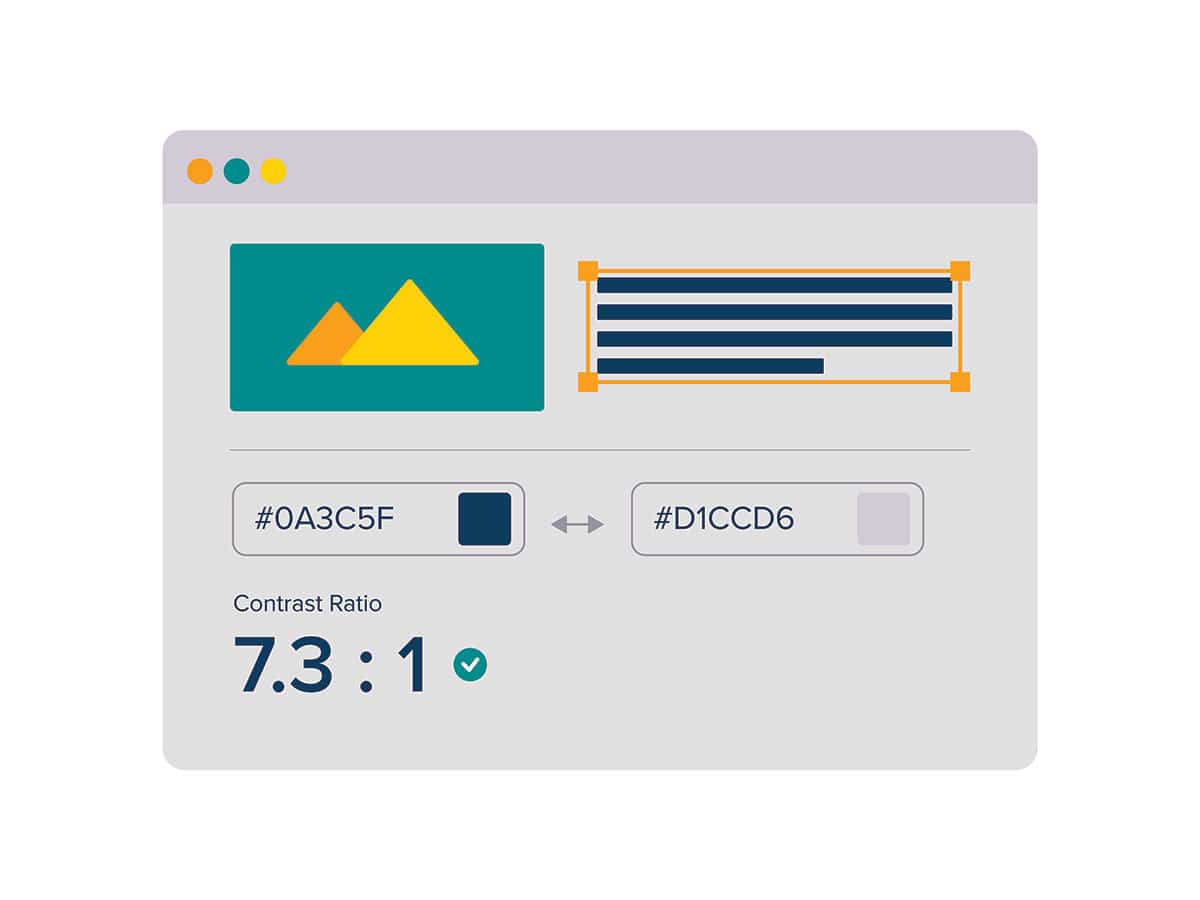
- Ensure proper contrast for accessibility compliance
Alt text and proper formatting support accessibility guidelines and can improve image search visibility, indirectly supporting overall technical seo. Format code snippets, templates, and checklists clearly with boxed styles so AI models and readers can easily copy and reuse them.
Make Your Article AI-Friendly Without Losing the Human Voice
AIO is not about seo copywriting “for robots”—it’s about formatting human-first content so AI tools can understand and safely quote it. AI prioritizes content it can trust to avoid hallucinations, so clarity and accuracy matter.
Encourage natural, conversational language that mirrors how people actually ask questions: “What’s the best way to format a blog post for AI overviews?” To transition from keyword-centric writing to Answer Engine Optimization (AEO) and Generative Engine Optimization (GEO), focus on answering the user’s query directly.
Content should be humanized with personal expertise and experience to enhance expertise, authoritativeness, and trustworthiness (E-E-A-T). Include light author perspective, real examples from 2024–2026, and short anecdotes to signal real experience. Including author credentials can build credibility for content in Google’s index.
State facts, definitions, and step-by-step processes in compact sentences so AI can extract them without misinterpreting. Avoid overly generic filler—focus on unique insights and frameworks that differentiate your article when writing content for your audience. Create content that serves the user’s question first, and optimization follows naturally.
Writing an Effective FAQ Section and Its Benefits
Including a well-crafted FAQ (Frequently Asked Questions) section at the end of your article can significantly enhance both SEO and user experience. FAQs address common questions your target audience might have, directly aligning with search intent and increasing the chances of your content appearing in “People Also Ask” (PAA) boxes and featured snippets.
When writing your FAQ, focus on clear, concise questions that reflect real user queries. Provide straightforward answers immediately after each question, followed by brief elaboration if needed. This format helps AI systems easily extract relevant answers, improving your article’s visibility in AI-driven search results.

Benefits of adding an FAQ section include:
Integrate internal links within your FAQ answers where appropriate to guide readers to deeper content on your site. Regularly update your FAQ to reflect new questions or changes in your topic, keeping your content fresh and relevant for both users and AI search engines.
Review, Edit, and Measure Performance
The first draft is rarely the best. Editing is where clarity, seo writing, and AIO really come together into content optimization that works.
Editing checklist:
- Verify headings match search queries and reflect user’s query patterns
- Ensure each section has a clear answer up top with important points visible
- Cut repetition and unnecessary words
- Check for jargon and simplify where possible
- Review for factual accuracy and current information
Use tools like Grammarly for grammar, but emphasize manual review for intent, tone, and accuracy. Verify the accuracy of statistics or claims generated by AI to ensure reliability when using AI tools in your workflow.
AI rewards fresh content—approximately 50% of content cited in AI searches is less than 13 weeks old.

Track article performance using GA4 (engagement time, scroll depth, conversion events) and Google Search Console (queries, impressions, clicks, AI Overview visibility where available in search engine results).
Iterate based on data: add missing sections for queries appearing in search results, improve low-CTR titles, or clarify sections showing high impressions but poor engagement. This attention to high quality backlinks and key points keeps your content competitive.
Conclusion: One Article, Three Audiences
A modern blog post must work simultaneously for three audiences: your ideal reader with a specific problem, search engines ranking pages in google search, and AI systems summarizing answers. When you write SEO content that satisfies all three, you build durable organic traffic that survives algorithm changes.
Starting from reader intent, then applying logical structure, chunking, metadata, and internal links creates seo friendly content that performs as a ranking factor across traditional and AI-driven search works. This isn’t a template—it’s a repeatable framework you adapt to your unique goals.
Your next steps: Audit your last 3–5 articles using this framework. Rewrite at least one to be fully SEO and AIO-ready. Document your process so your entire content team can produce consistent, high-performing articles. The investment in structure today pays dividends as search continues to evolve.
FAQs on How to Write Content on your Website
Request an AI Audit
AI-driven search is already shaping how people discover and choose organizations. Understanding how your website is interpreted by AI tools is the first step toward staying visible and trusted. Learn how your business and brand shows up in AI tools.